
What to Check Before Buying a 72V Golf Cart
Check battery details, charging requirements, controller documentation and braking hardware before choosing a 72V golf cart for your everyday use.
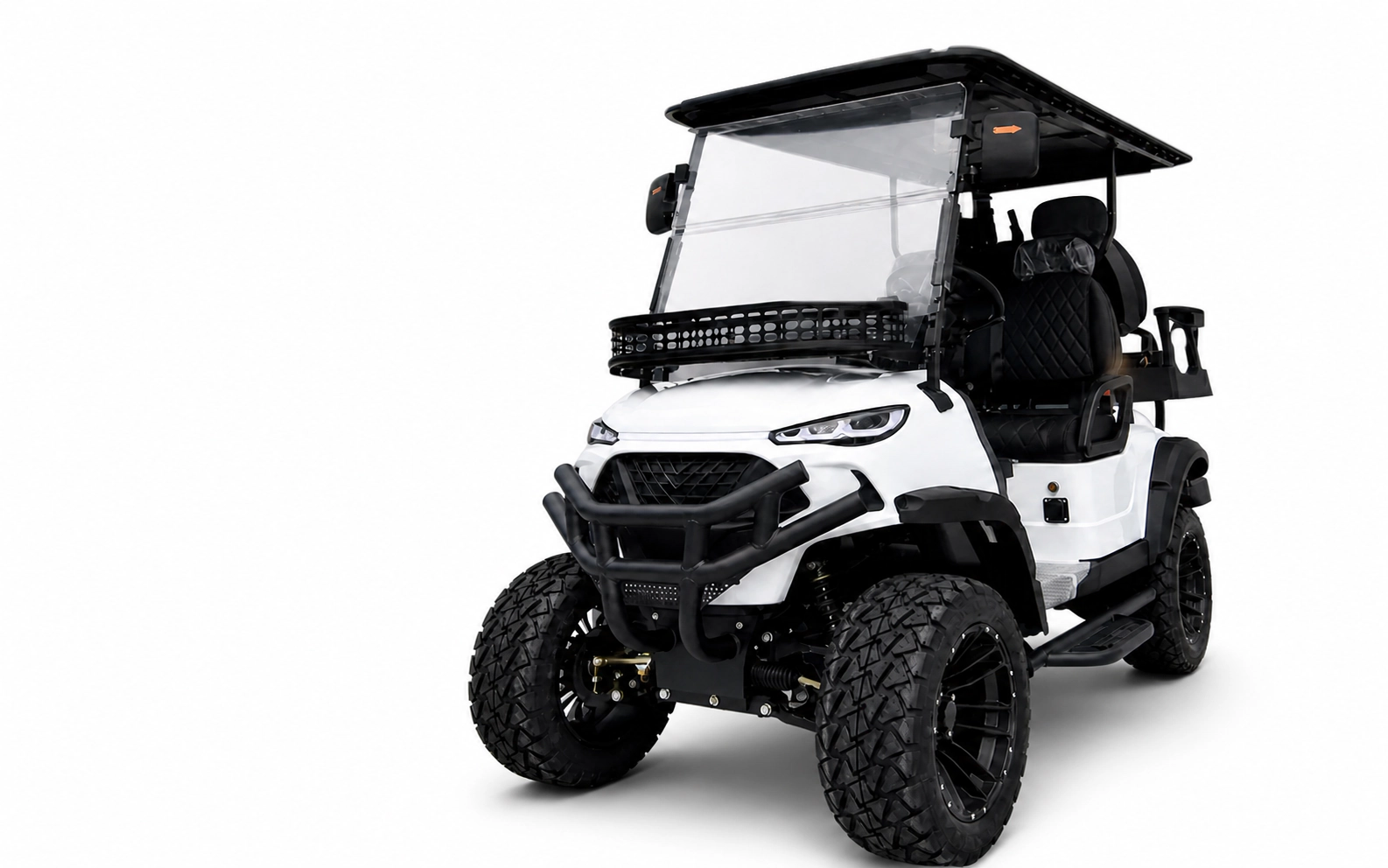
Before buying a 72V golf cart, check the complete battery specification, charging requirements, motor and controller documentation, braking hardware, and the conditions in which you plan to use it. Then confirm what your order includes and who can answer service questions after the sale.
The voltage is a useful starting point, but it is only one line in a vehicle specification. This guide uses the UrbanX Classic Series to show which details you can verify now and which questions to resolve before ordering.
Confirm the configuration on your order
Compare the vehicle listing with the written configuration supplied for your order. A model name or photograph alone cannot answer every equipment question, especially when you are comparing listings from different sellers.
Both the Classic 2+2 and Classic 4+2 list the following core equipment. Use this table as a fact check, then ask for clarification on any detail your intended use depends on.
| Item | Listed Classic configuration | What to confirm |
|---|---|---|
| Battery | 72V 100Ah lithium | Installed pack identity and its operating documentation |
| Motor | 7.5 kW AC | Suitability for your proposed application |
| Controller | NAVITAS | Exact model, documentation and applicable features |
| Frame | Aluminum | Care instructions and inspection requirements |
| Service brakes | Four-wheel disc brakes | Operating instructions and maintenance schedule |
| Parking brake | Electronic parking brake (EPB) | Operation and indications for the supplied vehicle |
Keep the confirmed configuration with your purchase records. If a quotation describes a different battery or other equipment, have the difference explained before accepting it.
Look beyond the battery voltage
For the current Classic Series listing, the battery specification is 72V 100Ah lithium. V (volts) describes voltage; Ah (ampere-hours) describes rated charge capacity under specified conditions, as explained in Battery Council International’s terminology guide. Compare the voltage, capacity and battery type together when reviewing a quotation.
UrbanX’s 106Ah preview refers to a future Classic Series configuration. The battery listed for the current vehicles is 100Ah.
Ask for the installed pack’s documentation, including its battery management system information and instructions for charging, storage and fault indications. You want to know which instructions apply to the vehicle you receive, rather than rely on advice for a different battery.
Trojan Battery’s lithium FAQ explains that a battery management system monitors charging and discharging. Use that explanation to ask for the documentation and fault indicators for the pack installed in your cart.
If a seller provides an operating-distance estimate, ask about the vehicle configuration and test conditions behind it. Compare those conditions with your route and passenger requirements. The battery label alone does not give you an operating-distance commitment.
Check the charging arrangement before purchase
Decide where the cart will be parked and charged, then ask for the charger information that applies to your order. Confirm the charger model, whether it is included, its electrical input requirements, and the instructions for connecting and using it.
An existing charger should not be assumed suitable just because its connector looks familiar. Trojan’s charger compatibility guide distinguishes charger models and battery profiles and requires correct configuration for its own batteries. Use the same purchasing discipline: obtain confirmation for the exact pack and charger in your order.
For your UrbanX order, get the pack- and charger-specific instructions from the team, and have any questions about the charging location’s electrical supply resolved before purchase. Also ask about the pack’s charging and storage temperature requirements if your cart will spend time in an unconditioned space.
Verify controller and brake documentation
The Classic Series lists a 7.5 kW AC motor and a NAVITAS controller. The brand name is a starting point for documentation, rather than a complete description of the installed controller model or enabled features.
Ask which controller comes with your vehicle, which instructions apply, and who handles diagnosis or service questions. If app functions or adjustable settings matter to you, confirm what the supplied configuration supports before buying.
NAVITAS’s TAC2 installation and service manual calls for trained technicians to install or service the controllers it covers. This is a model-specific example, not confirmation that UrbanX uses that particular TAC2 model. Request the documentation matched to your vehicle and a clear service contact instead of treating settings or electrical work as a buyer’s setup task.
For braking, the confirmed Classic listing includes four-wheel disc brakes and an electronic parking brake. Ask for an explanation of their operation, indicators and maintenance requirements. Those equipment descriptions do not establish a stopping-distance or hill-performance claim.
Describe your route and ownership routine
Tell the seller how you expect to use the cart. A household making occasional community trips has different planning questions from a property running repeated guest movements throughout the day.
Record your typical route, passenger load, surface conditions, gradients and frequency of use. For a fleet, include when vehicles return to the charging area and who will manage operating checks. This gives the team concrete requirements to review without asking it to judge suitability from voltage alone.
The Classic Series lists an aluminum frame, but you should still request the vehicle’s care and inspection instructions. Ask how routine maintenance is handled, which documentation accompanies the cart and how to raise an equipment question.
For passenger layout and vehicle fit, use our four-seater versus six-seater guide. Keep that decision alongside your equipment review rather than assuming a shared electrical specification makes the two models identical in everyday use.
Review the order details and support path
Before accepting an order, get a written description of the model, color, quantity and supplied equipment. Confirm any accessories separately, along with the total quotation and the arrangements relevant to your location.
Ask who your contact will be for operating questions, parts identification and service coordination. Request any applicable written coverage terms instead of relying on a general statement about support.
The Ontario, California warehouse page provides the warehouse location and listed inventory information. Have the team confirm availability for your requested model and color. Resolve any questions about vehicle inspection or collection arrangements directly; a warehouse listing alone does not establish an appointment or a handover plan.
Frequently asked questions
Does 72V tell me how far a cart will travel?
No. It is one specification, not an operating-distance guarantee. Request any performance information for the exact vehicle and the conditions used to establish it, then discuss your intended route and load.
Can I use a charger I already own?
Only after compatibility is confirmed for the installed battery, charger model and configuration. Supply the charger’s identification details when asking, and follow the instructions applicable to that combination.
Do both current Classic models have the same listed core hardware?
Yes. Both list a 72V 100Ah lithium battery, 7.5 kW AC motor, NAVITAS controller, aluminum frame, four-wheel disc brakes and EPB. Their passenger layouts and dimensions differ, so review the individual model pages too.
Prepare these details for your inquiry
Bring a short buying brief rather than just a voltage preference:
- Your intended use, typical route and passenger requirements.
- Preferred Classic model, color and vehicle quantity.
- Charging location and any existing charger’s identification details.
- Questions about the battery, controller, operating manuals and service contact.
- Your location and any order or handover arrangements that need clarification.
Keep the team’s answers with the confirmed specification. A complete record makes it easier to compare your options and recognize which details remain unresolved before purchase.
Bring us your buying checklist.
Share your route, group size and charging questions. Our team can confirm the current Classic Series configuration and availability.