
4-Seater vs 6-Seater Golf Cart: Which Layout Fits Your Needs?
Compare four-seat and six-seat golf cart layouts, passenger orientation and vehicle dimensions before choosing a cart for your household or property.
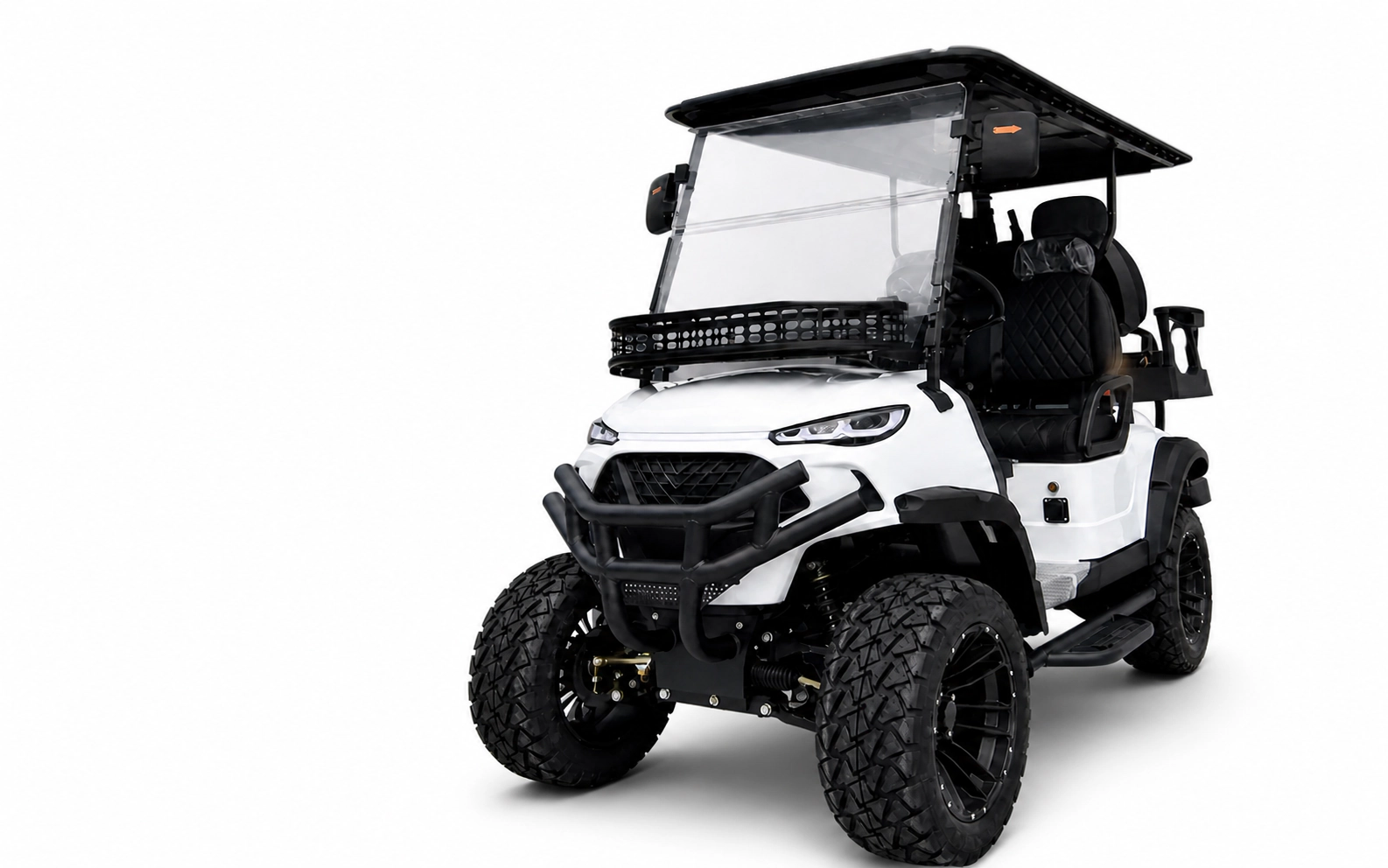
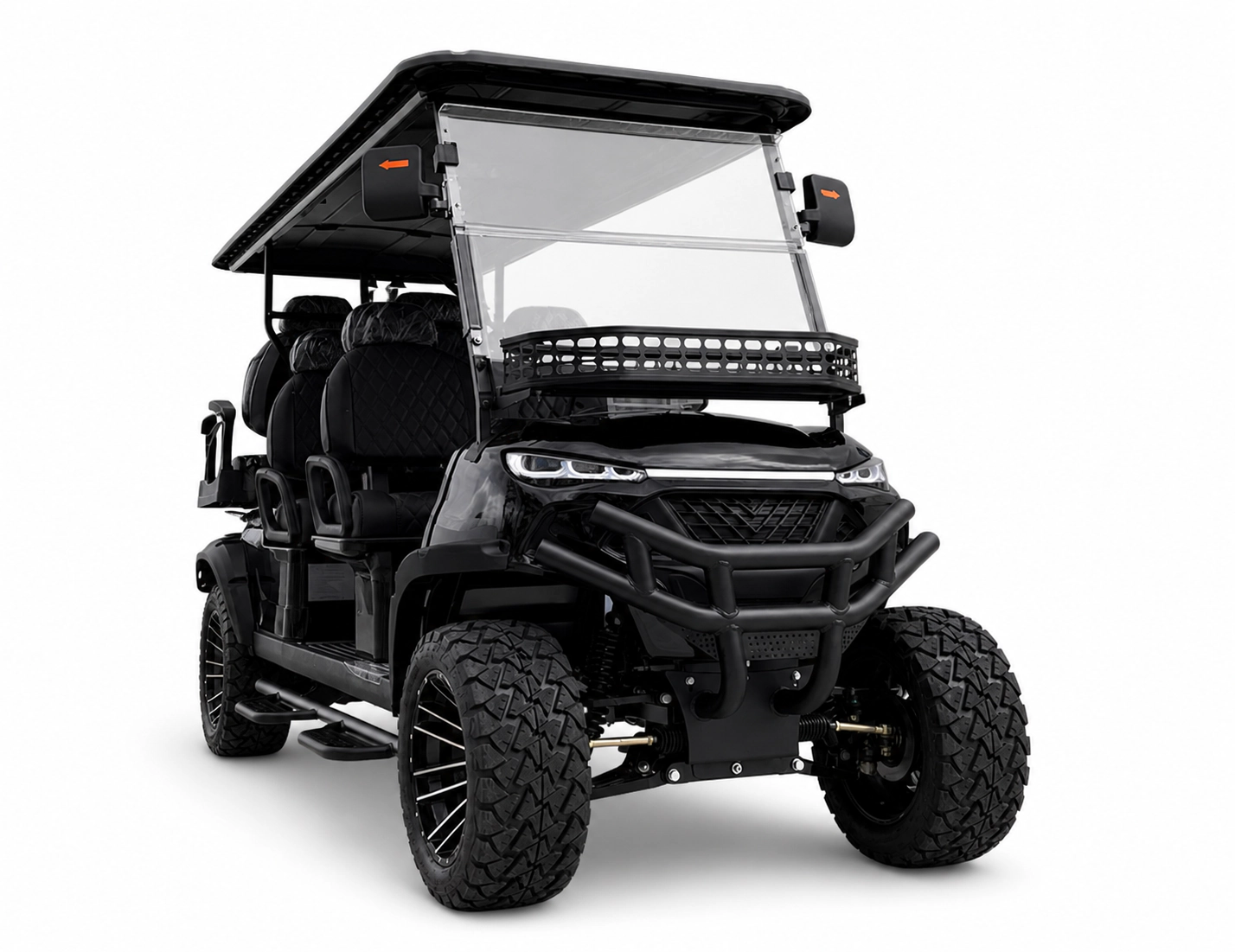
A four-seater golf cart suits a group that usually travels with four people or fewer. A six-seater gives a larger group room to travel together, but its additional seats also change the vehicle’s footprint. The useful question is how often you need those seats and whether the longer cart fits your everyday route and storage space.
For the UrbanX Classic Series, the choice is between the Classic 2+2, with four seats, and the Classic 4+2, with six. Here is a practical way to compare them for household trips, community use or guest movement on a property.
Start with your usual passenger count
Count everyone who normally travels together, including the driver. A four-seat layout has four seats in total; it does not mean four passengers plus a driver.
Look at a typical week rather than the largest gathering you can imagine. If your household generally travels as a group of two to four, four seats may cover most trips. If five or six people regularly need to travel together, the six-seat layout deserves closer consideration.
Occasional extra demand still matters. Consider whether a larger group is a rare exception or part of the reason you are buying the vehicle. For a resort or community fleet, record the sizes of the groups you actually move. That gives you a more useful starting point than choosing every vehicle around the busiest single trip.
Passenger count is only one part of the brief. Tell the team about your riders, belongings and application so they can discuss the appropriate configuration and applicable vehicle limits.
Compare the seating layouts
The numbers in each Classic model name describe its seating arrangement:
- The Classic 2+2 four-seater golf cart has two forward-facing and two rear-facing seats.
- The Classic 4+2 six-seater golf cart has four forward-facing and two rear-facing seats.
Both layouts therefore include a rear-facing row. Choosing six seats adds two forward-facing positions; it does not make every passenger face forward.
Think about who will use each row and how people will enter and leave the cart at your normal stopping points. A household comparing the vehicles should look beyond the seat total and consider the arrangement everyone will use. A property operator should consider the boarding area alongside the route itself.
Seats also should not be treated as a substitute for a confirmed cargo arrangement. If bags, equipment or other items are a regular part of your trips, describe those requirements when you inquire.
Measure the extra length
The listed dimensions show the clearest physical difference between these two models. Length increases by 750 mm, while the listed width and height are the same.
| Specification | Classic 2+2 | Classic 4+2 |
|---|---|---|
| Total seats | 4 | 6 |
| Seat orientation | 2 forward + 2 rear | 4 forward + 2 rear |
| Length | 3000 mm | 3750 mm |
| Width | 1360 mm | 1360 mm |
| Height | 2010 mm | 2010 mm |
Measure the actual space you plan to use before purchasing. For storage, note the clear door opening, usable depth and overhead clearance. Include room for access around the parked vehicle and check anything that occupies part of the space, such as shelves or another vehicle.
For a property route, check gates, narrow passages, stopping areas and places where vehicles need to turn or pass. Overall dimensions alone do not establish turning clearance. If a route is tight, share measurements and photographs with the team and arrange to resolve the fit question before committing to an order.
The smaller model’s shorter listed length may matter in a limited storage area. It does not, by itself, establish handling, speed or any other performance advantage.
Match the cart to everyday use
For a household, start with the people who take the same trips most often. A couple or family that normally uses up to four seats can compare the Classic 2+2 against their storage space and passenger preferences. A household that regularly moves five or six people has a clearer reason to consider the Classic 4+2.
For a resort, list your regular guest movements: where groups board, how many people travel together and where they leave the vehicle. Six seats may suit recurring larger groups, while four seats may fit smaller parties. Check the proposed route and boarding locations for either choice.
For a community or fleet buyer, different vehicles can serve different requirements. Build the proposed model mix around observed group sizes and available parking, rather than assuming every cart must have the same seating capacity. Include the vehicle quantity and the intended use of each model in your inquiry.
Separate seat count from platform specifications
The two current Classic models share the listed 72V 100Ah lithium battery, 7.5 kW AC motor, NAVITAS controller and aluminum frame. Both also list four-wheel disc brakes and an electronic parking brake.
Those common specifications help you compare the platform, but they do not make the vehicles interchangeable for every job. Passenger layout and overall length still differ.
Do not infer range, speed, climbing ability or towing capability from the seat count, dimensions or voltage. Ask about the conditions relevant to your intended use. A route with particular gradients, surface conditions or operating requirements needs its own discussion before purchase.
Prepare your buying checklist
Before contacting the team, put these details together:
- Usual group size: include the driver and explain how often you need more than four seats.
- Seating preference: review the forward-facing and rear-facing positions in both models.
- Space measurements: provide storage clearance and any tight points along the route.
- Application: describe household, community or guest transport needs, including belongings carried.
- Model and quantity: identify Classic 2+2, Classic 4+2 or a proposed combination.
- Open questions: ask about current colors, availability and the details you need to finalize your decision.
You can review the Ontario, California warehouse page for the location and listed inventory information. Availability can change, so have the UrbanX team confirm the model, color and quantity for your order.
Choose the layout around the trips you actually make: four seats when they cover your usual group, six when those extra places are regularly useful. Then confirm the vehicle’s fit and configuration before moving ahead.
Bring us your seating plan.
Tell us your usual group size, application, model preference and vehicle quantity. Our team can confirm current availability and discuss your questions.